

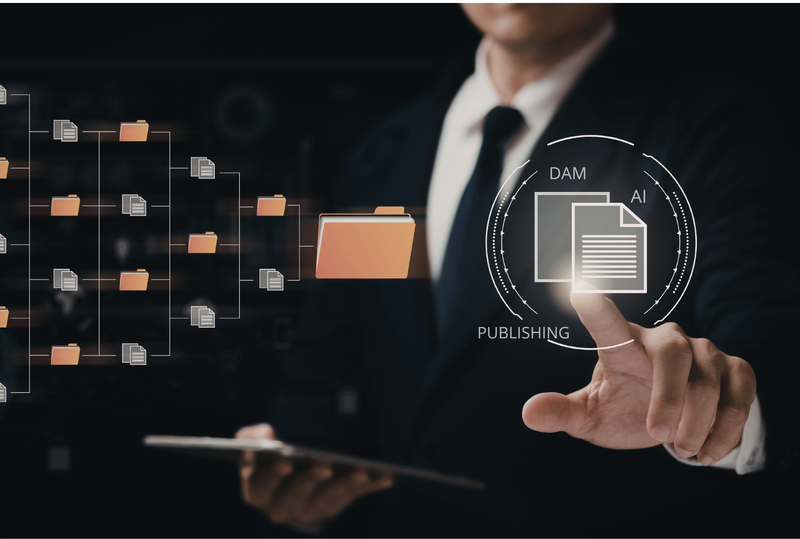
In today’s publishing landscape, the challenge is no longer simply “producing content”. The real strategic issue lies in orchestrating data, digital assets and channels within a continuous, coherent and scalable flow. Publishers are dealing with an ever-growing volume of articles, images, videos, social content, newsletters, app versions and print publications. The risk is not a lack of content, but a slowdown in the process that turns it into value.
This is where the integration between the editorial system and the DAM radically changes the perspective. These are not two separate systems, but two complementary dimensions of a single content supply chain.
From silos to integrated content orchestration
Traditionally, editorial teams and designers work with separate tools: structured information on one side, multimedia assets on the other. This fragmentation leads to misalignment, duplication and longer production times.
An updated image is not always linked to the correct version of an article; a modified data point does not automatically reflect across all content variations.
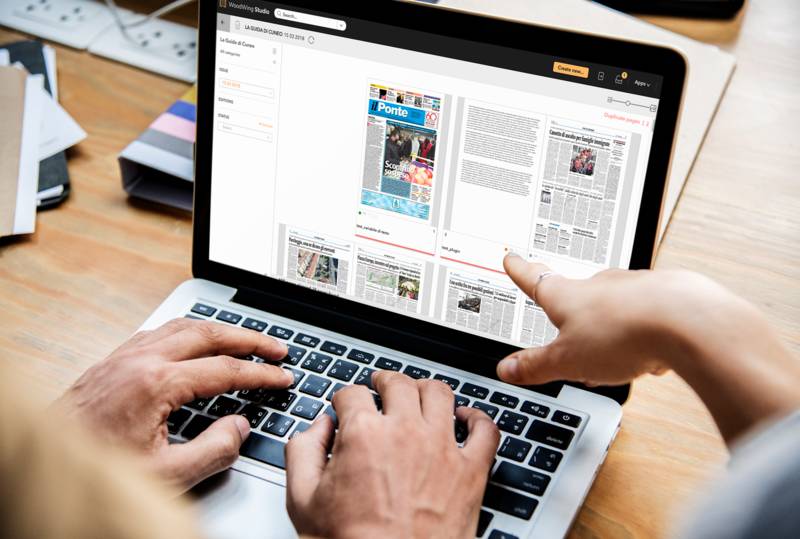
An editorial system can be seen as the informational “brain”: it centralises structured data, metadata, SEO keywords, rights information, versioning and localisations. A DAM, on the other hand, acts as the advanced hub for digital assets: high-resolution images, videos, graphic files, social and advertising materials, all enriched with intelligent metadata.
When these two worlds are natively connected, content is no longer a collection of scattered files, but an orchestrated ecosystem where everything is synchronised.
An integrated ecosystem reaches its full potential when enhanced by AI. With features such as auto-tagging, automatic visual recognition and metadata enrichment, the asset management system becomes an active system rather than a simple archive.
Thanks to the editorial system, content and multimedia assets can be combined to automatically generate layouts for digital publishing, newsletters, landing pages, social content and even print materials. Artificial intelligence supports copywriting, optimises texts for SEO and adapts content for different channels, ensuring editorial consistency and execution speed.
For publishers, this means drastically reducing the time between content ideation and multi-channel publication. It is not only a matter of internal efficiency, but of competitive positioning. In today’s digital market, speed is essential.
Publishing is increasingly omnichannel. Content no longer lives solely on websites or in print. It extends to social platforms, mobile apps, marketplaces, video environments and new interactive formats. Managing this complexity with disconnected tools multiplies the risk of error.
Through technological innovation, every upstream update – a revised title, an updated keyword, a newly approved image – is automatically reflected across all connected channels.
Many publishers focus on cost optimisation, but the real shift is turning content orchestration into a growth engine. When the content supply chain is integrated and automated, it becomes possible to launch new editorial projects more quickly, test new formats, localise content for different markets and monetise across multiple channels without proportionally increasing operational complexity.
Moreover, the centralisation and enrichment of metadata improve asset discoverability, increase content reuse and strengthen SEO strategies. An intelligent archive is not just an internal organisational tool; it becomes a competitive asset.
GMDE supports publishers in designing an integrated architecture that brings together systems and editorial production tools within a single, coherent ecosystem. The goal is not to introduce technology for its own sake, but to build a scalable infrastructure capable of supporting long-term digital transformation.
One of our experts will be ready to provide you with all the support you need – free of charge.
The customers with whom GMDE works daily are more than 100 and... they are all satisfied
See more







GMDE has got those certifications and partnerhips