Digital First or Paper first: why choose?
This content was produced in collaboration with the Digital Content Observatory of the Politecnico di Milano. GMDE is a sponsor of the Observatory.
The digital transformation of publishing
Coronavirus has undoubtedly changed the world of newspaper and magazine publishing, and information and news in general, triggering a significant increase in online news consumption and forcing publishers, willingly or unwillingly, to accelerate their digital transformation process, integrating traditional print media with digital channels as effectively as possible.
Towards the "neutral content"
By increasingly shifting
the editorial proposal towards digital channels, publishers are therefore forced, when they want to publish content, to deal not only with a written text (as can be an article) but with all the digital materials that enrich the text itself, materials such as images, videos, podcasts or posts published on social media. An image or a video can certainly complete an article, but they can also replace it by becoming the content to be published, depending on the channels through which the publisher decides to spread the topic, whether digital or printed.
For this reason, the publisher must collect and organize all the material related to content: texts, images, videos, podcasts, related posts on different social media.
Depending on the channel on which the publisher subsequently decides to publish the content, may later select, among the various materials collected, the most suitable. We are therefore faced with a
"neutral content", that is to say, a content whose final destination has not already been defined before and which, therefore, will be much easier to adapt to the publication channel.
The advantages of neutral content
But what are the advantages of using
an editorial system that is based on neutral content?
Surely thinking according to neutral content allows the publisher to enrich their offer, enhancing the content he wants to publish: all the material that is collected in the course of research on that topic can be used, from images to videos, to posts on Facebook, Instagram, Tik Tok, just to name a few.
In this way also
the experience of the readers changes completely: readers can, in fact, interact more, providing new images, new texts, also participating in the enrichment of the content itself, which then becomes dynamic. The content also, conceived as neutral, allows the publisher to
customize it according to the target audience of readers to whom it is addressed, to publish it on different titles, to be able to reuse it and thus increase its visibility.
How to manage neutral content
Before approaching an editorial system based on neutral content, it is important to focus on
some points of attention. For example, an economic-financial assessment of the change in its entirety is needed. In fact, the purchase of
digital technologies for the production of content and for their archiving should be envisaged, which comply with all the copyright laws and training in the new skills of all the people involved. More and more often, then, publishers add to an editorial system the related
DAM (Digital Asset Management), ie an intelligent archive that allows a faster and easier organization of all digital resources such as images, video, audio.
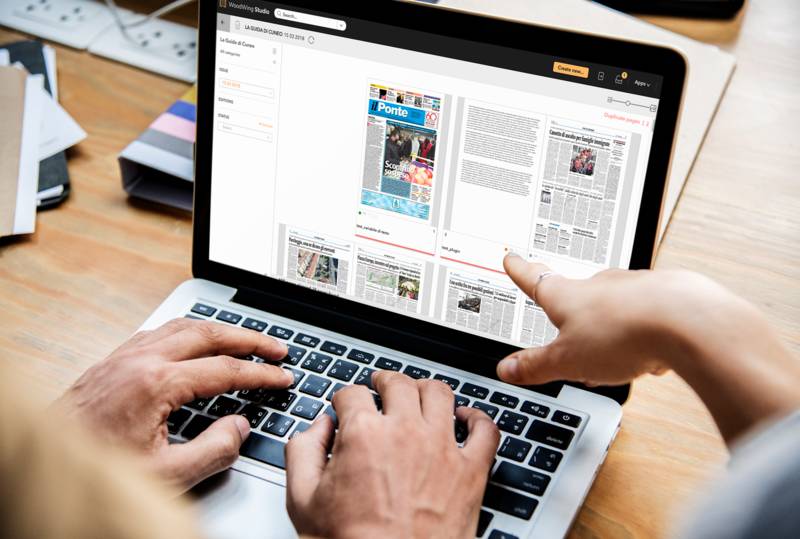
Because of the multiplicity of content to be managed and stored, publishers must necessarily use new digital technologies to be increasingly efficient and multichannel. Only in this way, in fact, can the publisher communicate quickly with the author and speed up the process of feedback and acceptance of the content, and its publication. Thanks to the use of digital, the publisher can also verify the consistency between the contents offered to the reader on printed paper and those present online, maintaining control over the various publication channels.
In a context as uncertain as to the one in which we live today, where social distancing and lockdown are tremendously current phenomena, digital technologies can be an effective and useful tool to transform the entire sector.
The approach to a publishing system based on neutral content, combined with the potential of the DAM, thus allows newsrooms to convert from physical to fully virtual, ensuring business continuity and full governance and control of content and distribution channels.